
Roofer in Garfield, NJ
Garfield Roofs Built for What Bergen County Actually Throws at Them
Hear from Our Customers
Local Roofing Company Garfield, NJ
When your roof is in bad shape, everything else feels uncertain. You’re watching the ceiling after every storm. You’re wondering if that soft spot near the attic hatch is something serious. You’re putting off the call because you don’t know if you’re about to get talked into a full replacement you may not need. That uncertainty is exhausting — and it’s exactly what a real inspection is supposed to eliminate.
Garfield sits at the junction of the Passaic and Saddle Rivers, and that geography matters more than most homeowners realize. The moisture levels near those river corridors accelerate shingle degradation, promote algae growth, and eat away at flashing faster than homes a few miles inland. Add Bergen County’s documented hail seasons, nor’easter winds, and the freeze-thaw cycles that hit northern NJ every winter, and you’re dealing with a roof that works harder than most. A properly installed, properly ventilated roof doesn’t just protect the structure — it stops the compounding damage before it reaches your walls, your insulation, and your living space.
A lot of Garfield’s housing stock was built between the 1940s and 1980s. That means a significant number of homes in this city are operating on roofs that are at or past their designed lifespan. Getting a clear, documented picture of where yours actually stands — before a leak forces the decision — puts you in control of the timeline and the cost.
Roofing Company in Garfield, NJ
We are a licensed, family-owned exterior renovation company with over ten years of experience working on homes across northern and central New Jersey. We hold NJ Home Improvement Contractor License #13VH10605800 — look it up on the NJ Division of Consumer Affairs website in about thirty seconds. That license isn’t just a number on a form. It means permits get pulled, work gets inspected, and you’re protected if anything ever needs to be revisited.
We serve Garfield and Bergen County homeowners with the same approach every time: a free inspection with a documented photo report, a clear written estimate before any work begins, and consistent communication through every stage of the job. No surprise line items. No vague timelines. No chasing someone down for an update after the deposit clears.
For Garfield homeowners specifically — many of whom commute via Route 46 or the Bergen County Line and don’t have time to babysit a contractor — that communication standard isn’t a bonus. It’s the baseline. Se Habla Español, which matters in a city where nearly half of residents were born outside the country and deserve to fully understand what they’re agreeing to before a single shingle comes off their roof.
Affordable Roofers in Garfield, NJ
It starts with a free roof inspection — not a sales visit dressed up as one. A licensed inspector examines the exterior of your roof, checks the attic for ventilation issues and moisture intrusion, assesses your gutters and flashing, and delivers a documented photo report of everything found. You keep that report whether you move forward with any work or not. For a lot of Garfield homeowners, that report alone answers the question they’ve been sitting on for months.
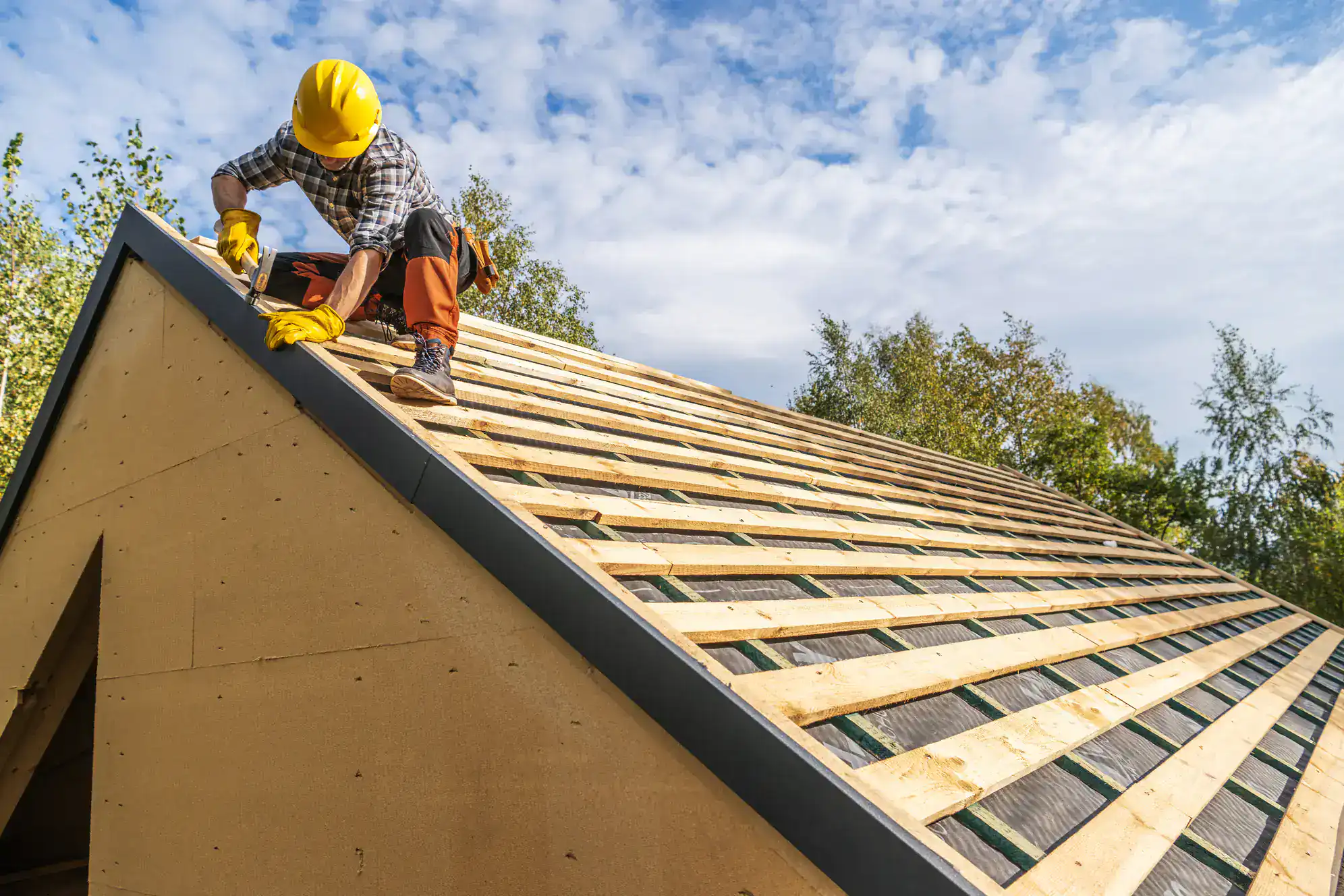
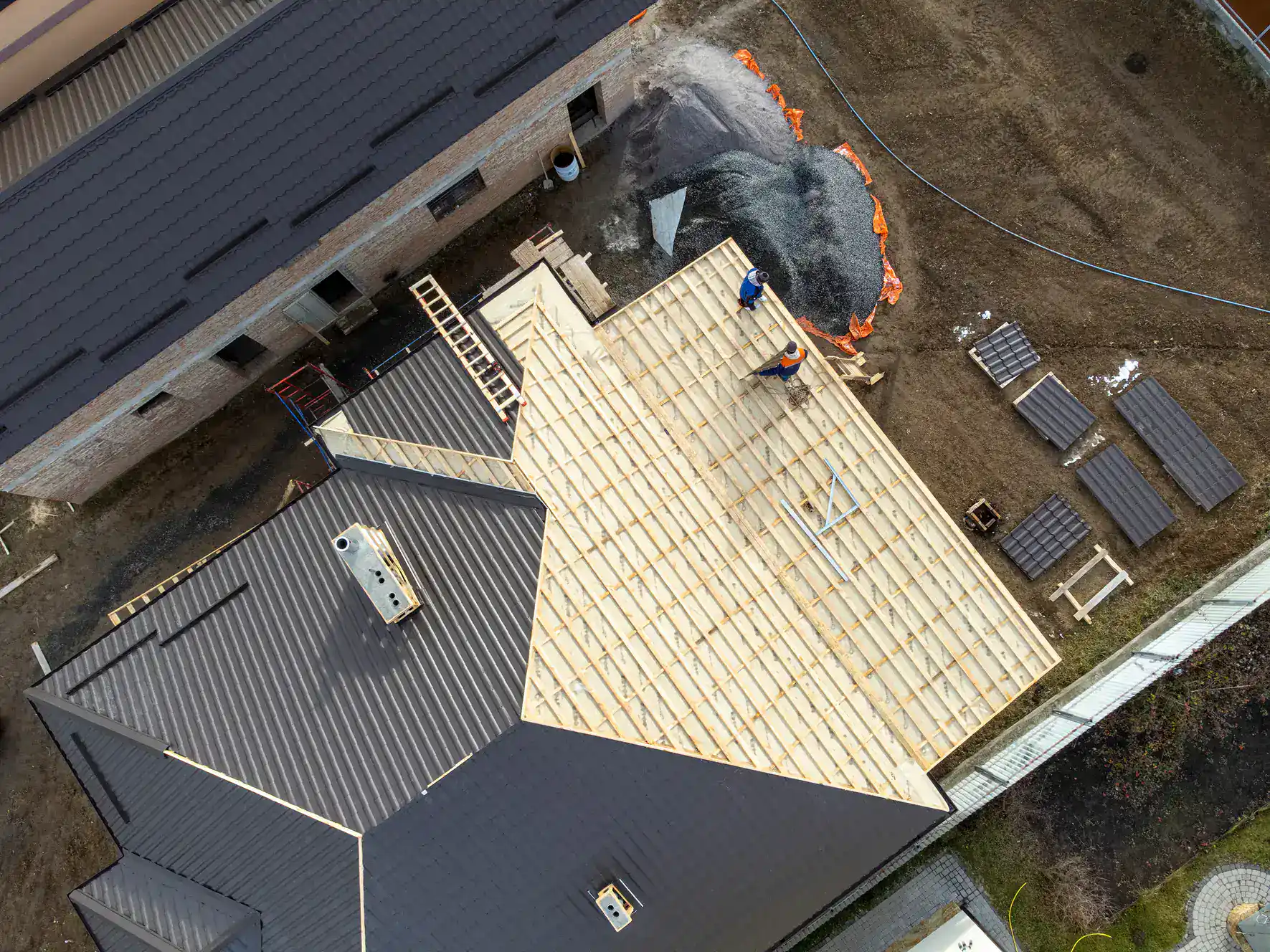
If repairs or a replacement are recommended, you’ll receive a complete, itemized estimate before anything is scheduled. Garfield’s Building Department requires permits for full roof replacements, and we handle that process as part of the job — not as an add-on, not as a surprise. The permit protects you legally, ensures the work is code-compliant, and creates a documented record that matters if you ever sell the home. Contractors who skip that step are leaving you exposed, and that’s worth knowing before you sign anything.
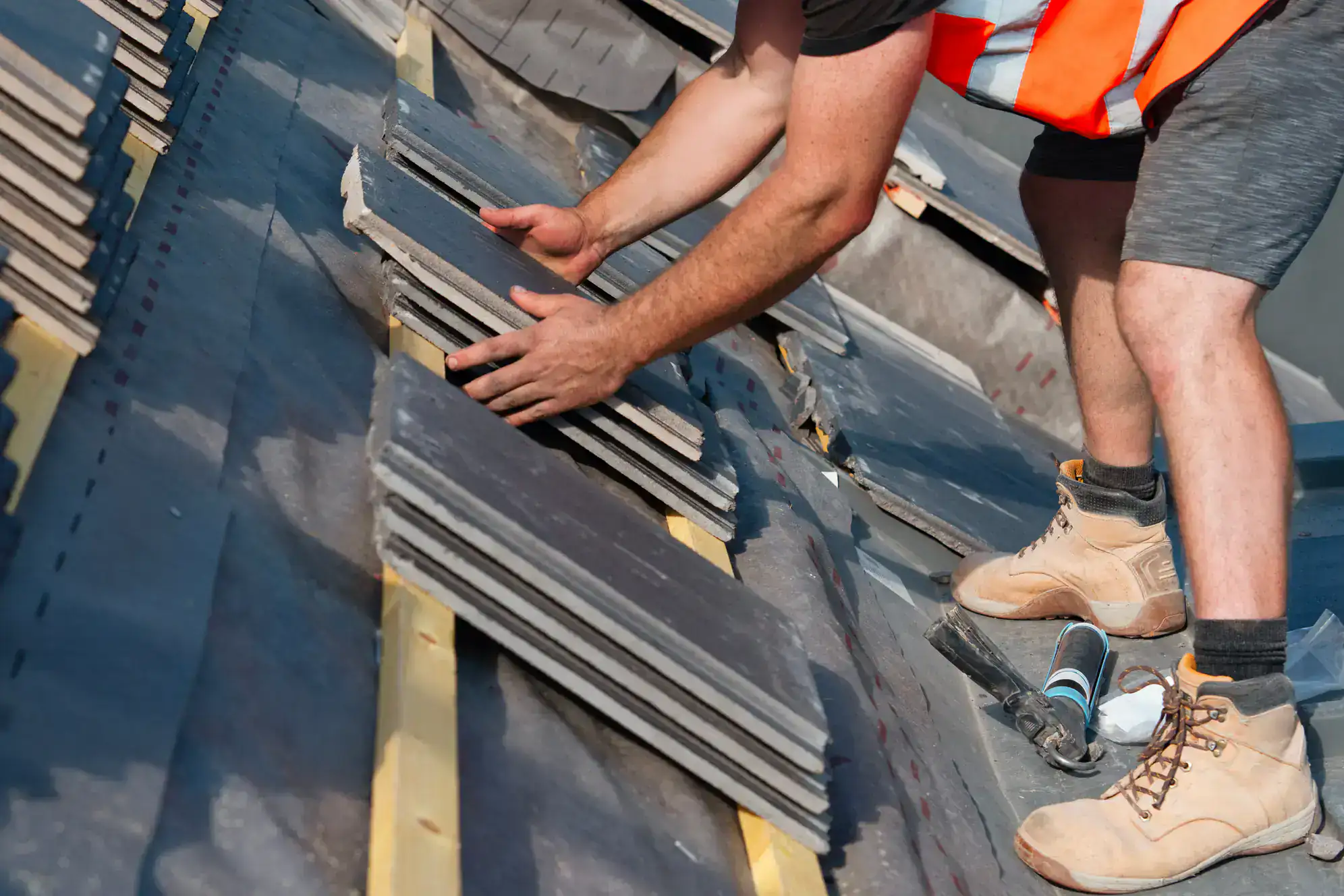
Once the work is underway, you’ll know what’s happening and when. The crew shows up as scheduled, the job gets done to spec, and before anyone leaves, you walk the completed work together. If something doesn’t look right, it gets addressed on the spot. That’s the standard — not the exception.
Ready to get started?
Emergency Roof Repair in Garfield, NJ
We handle the full range of residential and commercial roofing work — inspections, repairs, full replacements, flat roofing, TPO, and EPDM systems — along with gutter and siding services that often tie directly into roof performance. Clogged or damaged gutters are one of the leading contributors to ice dam formation in northern NJ winters, and Garfield’s tree-lined streets mean gutters fill up fast in the fall. Getting the gutters assessed in the same visit as the roof isn’t just convenient — it’s the smarter diagnostic.
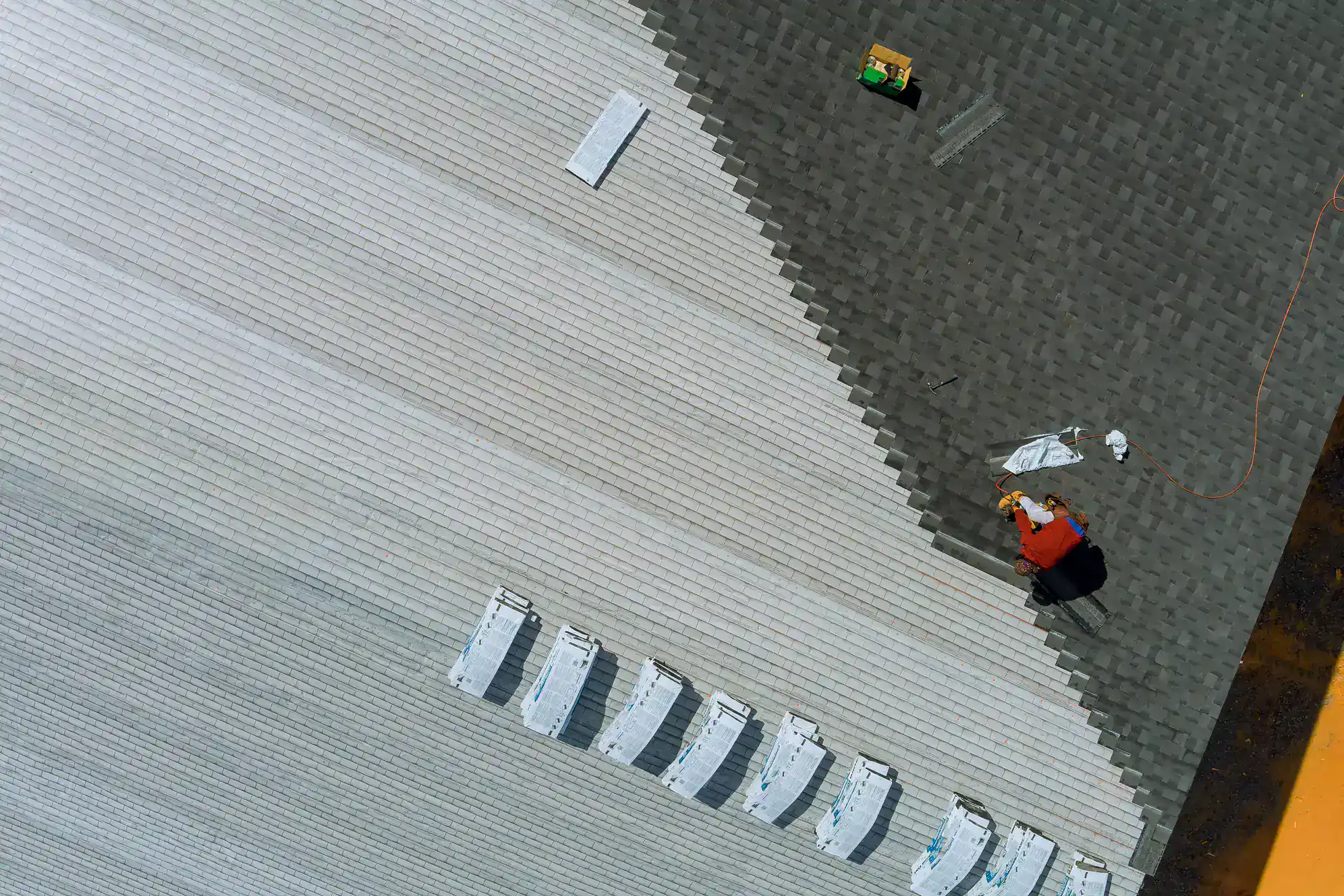
For homes near the River Drive corridor or anywhere close to the Passaic River basin, the moisture exposure is real and ongoing. That’s why material selection matters. Algae-resistant shingles, proper underlayment for freeze-thaw exposure, and correctly detailed flashing around chimneys and pipe penetrations are not upsells — they’re the difference between a roof that lasts 25 years and one that needs attention in 12. Manufacturer certifications back the installation, which means you get access to enhanced system warranties that uncertified contractors simply cannot offer. That warranty is transferable, which adds documented value to your home at resale.
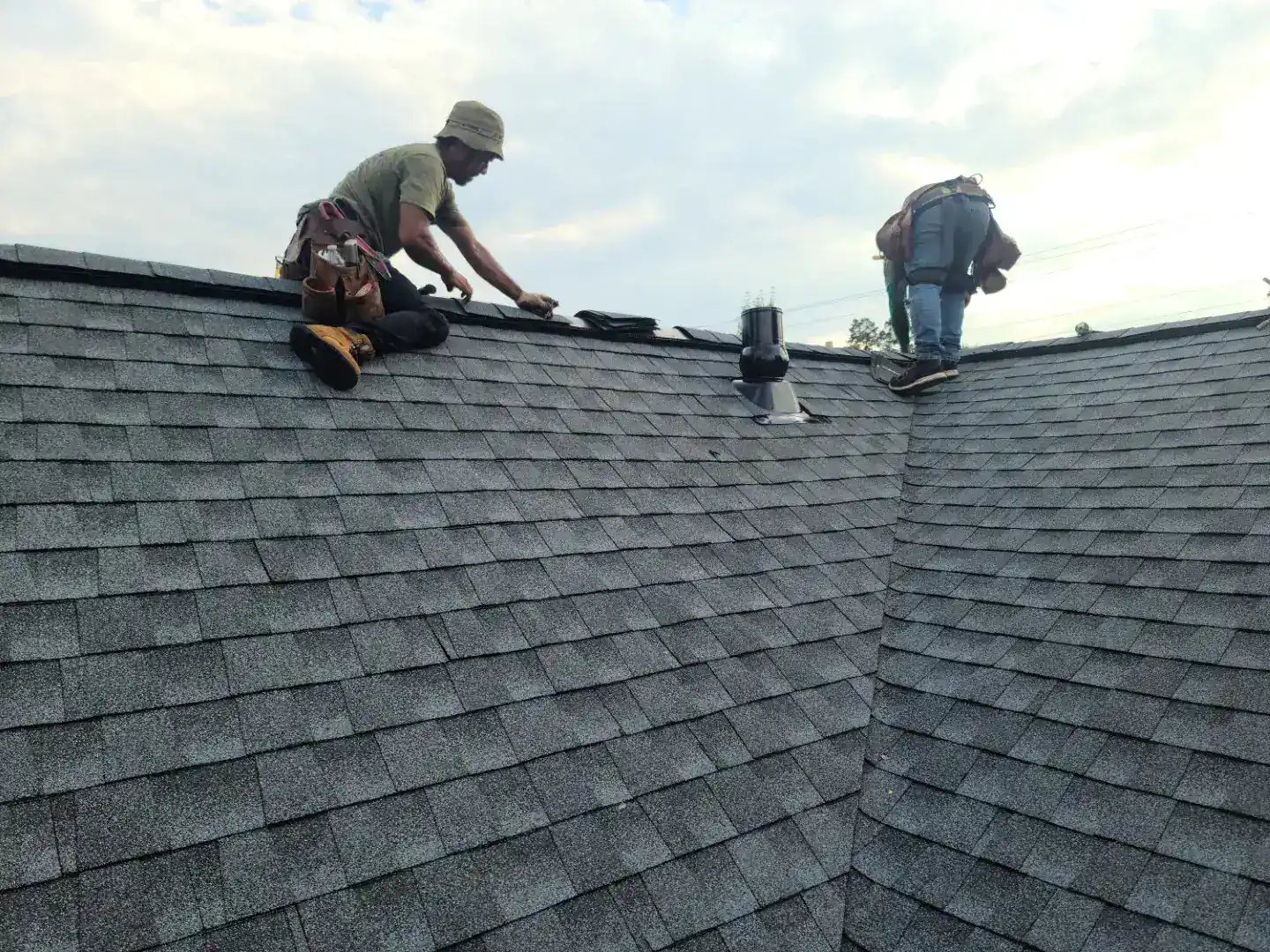
And when a nor’easter rolls through or a summer hail event leaves you with a visible problem at 10pm, we provide emergency roof repair service around the clock. You’re not leaving a voicemail and hoping someone calls back before the ceiling gets worse.
Does replacing a roof in Garfield, NJ require a building permit?
Yes — a full roof replacement in Garfield requires a building permit through the city’s Building Department. Garfield operates under the NJ Uniform Construction Code, and the city has its own online permit portal where applications are submitted and processed. Before a permit is issued, contractors are required to post a security bond of $3,000 for one- and two-family homes, which is part of the city’s standard construction requirements.
This matters to you as a homeowner because unpermitted roofing work can create real problems — insurance claim complications, issues at resale, and no code inspection to confirm the work was done correctly. We handle all of this as part of the job. If you’re getting quotes from contractors who haven’t mentioned the permit, that’s worth asking about directly before you commit.
How do I know if my roof needs to be repaired or fully replaced?
The honest answer is that you usually can’t tell from the ground, and neither can most homeowners from a quick visual check. Age is the starting point — if your roof is over 20 years old and hasn’t been replaced, it’s worth a professional assessment regardless of whether you’re seeing active leaks. In Garfield, where a large portion of the housing stock dates back to the mid-twentieth century, that threshold applies to a lot of homes.
What a real inspection looks for goes beyond missing shingles. It includes granule loss patterns, the condition of flashing around chimneys and vents, attic ventilation and moisture levels, and the state of the decking underneath. Some roofs that look rough from the street have years of life left. Others that look fine from the curb have underlayment failures that are already letting moisture in. The only way to know is to actually get up there and document what’s happening — which is exactly what the free inspection covers.
What causes ice dams, and are Garfield homes particularly at risk?
Ice dams form when heat escapes through the roof deck, melts snow unevenly, and the runoff refreezes at the eaves where the roof is colder. That cycle forces water backward under the shingles and into the structure. The damage it causes — to insulation, drywall, and framing — often doesn’t show up until spring, well after the source of the problem is gone.
Garfield’s older housing stock is especially vulnerable to this. Many homes built between the 1940s and 1980s were constructed before modern attic ventilation standards were established, which means heat escapes more readily through the roof deck than it should. A proper roof replacement addresses this by assessing and correcting the ventilation as part of the installation — not just swapping shingles on top of a system that’s still going to create the same problem next winter. If your attic runs warm in January, that’s worth flagging before the next nor’easter hits Bergen County.
How much does a roof replacement typically cost in Garfield, NJ?
The range for a full asphalt shingle roof replacement in northern New Jersey generally runs between $8,000 and $20,000 for most residential homes, depending on the size and pitch of the roof, the materials selected, the condition of the decking underneath, and whether any ventilation or flashing work is needed at the same time. Flat roofing systems using TPO or EPDM are priced differently and depend heavily on square footage and existing substrate conditions.
What drives cost in Garfield specifically includes the age of the home — older construction sometimes reveals decking damage or inadequate ventilation that needs to be addressed during the replacement — and material choices that account for the area’s climate exposure. Algae-resistant shingles and proper underlayment for freeze-thaw conditions are worth the incremental cost given what Bergen County winters actually do to a roof. The estimate you receive from us is itemized and complete before any work begins, so there are no line items appearing after the job starts.
What roofing services are available for commercial properties in Garfield?
Commercial roofing in Garfield typically involves flat or low-slope systems — TPO and EPDM are the most common in this market, and both are within our service scope. TPO is a heat-welded single-ply membrane that performs well in northern NJ’s temperature swings and is energy-efficient due to its reflective surface. EPDM is a rubber membrane that’s been a standard in commercial flat roofing for decades and holds up well against the freeze-thaw cycles Bergen County produces every winter.
The inspection and estimate process for commercial work follows the same transparent structure as residential — documented assessment, complete written estimate, and no work scheduled until everything is approved. If your commercial property has an existing flat roof showing ponding water, membrane separation, or visible seam failures, those are signs worth getting in front of before the next heavy rain event. Emergency repair service is also available for commercial properties when a situation can’t wait.
Do you offer bilingual roofing services for Spanish-speaking homeowners in Garfield?
Yes — and in Garfield, that’s not a minor detail. Nearly half of the city’s residents were born outside the United States, and a significant portion of the community is more comfortable communicating in Spanish. When you’re making a decision about a major home investment — reviewing an estimate, understanding what materials are being used, asking questions about the warranty — you deserve to have that conversation in the language where you’re most confident. Misunderstandings in a roofing contract can be expensive.
Se Habla Español means the full process is available in Spanish: the inspection walkthrough, the estimate review, the project timeline, and the post-job conversation. It’s not a translated brochure handed over at the end — it’s actual communication at every stage. For Garfield homeowners who have previously struggled to get clear answers from contractors because of a language gap, this is a straightforward way to make sure that doesn’t happen here.