
Metal Roofers: Installation & Material Options
Summary:
You’re looking at metal roofing because you’re tired of replacing shingles every 15 years. Or maybe you want the energy savings. Or you just watched your neighbor’s asphalt roof get shredded by last month’s storm while the metal roof down the street didn’t lose a single panel.
Whatever brought you here, you’re asking the right questions. Metal roofing isn’t just a trend—it’s a decision that affects your home for the next 40 to 70 years. That means understanding what you’re actually buying, what it costs, and why some installations last a lifetime while others start failing in a decade.
Let’s talk about what separates a quality metal roof from one that becomes your next regret.
Standing Seam Steel Roof Systems
Standing seam systems are what most people picture when they think “modern metal roof.” Vertical panels run from ridge to eave with raised seams connecting each section. Those seams aren’t just for looks—they’re engineered to interlock and keep water out without a single exposed fastener.
That’s the difference. Every screw on an exposed fastener roof is a potential leak point. Rubber washers degrade. Screws back out. Over time, you’re looking at hundreds of entry points for water.
Standing seam eliminates that problem entirely. Clips attach underneath, hidden from weather. Panels expand and contract with temperature changes without stressing the attachment points. It’s why these systems routinely hit 50-plus years while exposed fastener roofs start needing attention at 20.
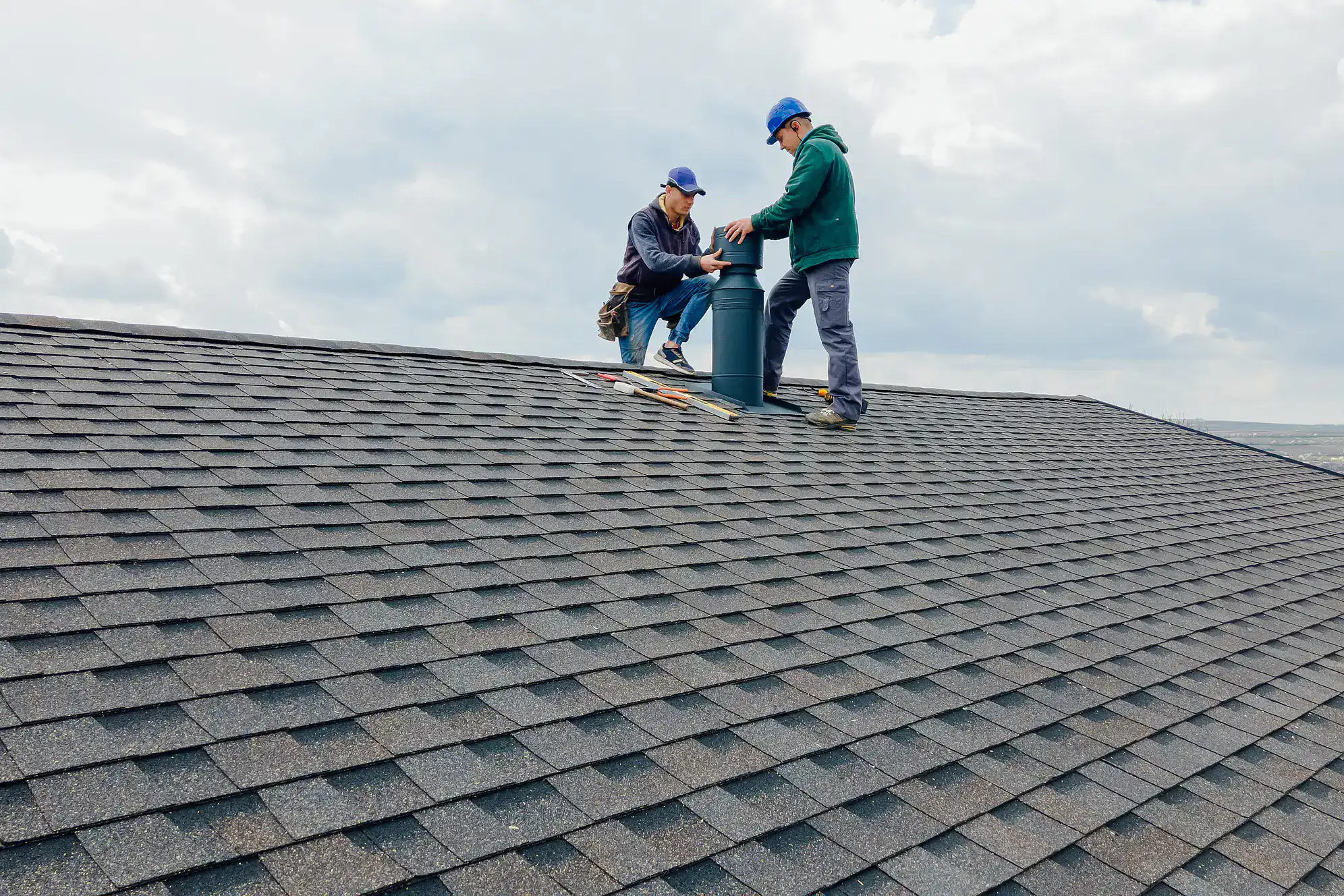
Standing Seam Metal Roofers and Installation Requirements
Not every roofer knows how to install standing seam correctly. The panels need precision. Seams must align. Clips have to accommodate thermal movement without restricting it.
Get it wrong and you’ll see oil-canning—visible waviness across the panel face that screams “amateur work.” Worse, improper fastening leads to leaks, panel separation, or damage during the next windstorm.
Professional standing seam metal roofers understand gauge requirements. In Union County, NJ, where snow loads and freeze-thaw cycles are standard, 24-gauge steel is the minimum. Thinner material doesn’t have the structural rigidity to span between clips without flexing. Some contractors try to save money with 26-gauge. Don’t let them.
You also need the right underlayment. Synthetic products outlast traditional felt and provide better moisture protection. Cheap underlayment fails before the metal does, which defeats the entire point of installing a long-lasting roof.
Ventilation matters too. Without proper airflow, moisture builds up under the panels. That leads to rust on steel systems and condensation damage to your decking. A qualified installer designs ventilation into the system from the start—not as an afterthought when problems show up.
The coating makes a difference in how long your roof looks new. PVDF finishes resist fading and chalking far better than standard paints. You’re paying for a roof that performs for decades. Spending a bit more on a finish that maintains its appearance is worth it.
Roofing Cost for Standing Seam Systems
Standing seam metal roofing costs between $10 and $18 per square foot installed in 2026. For a typical 2,000-square-foot roof, you’re looking at $20,000 to $36,000 depending on material choice and roof complexity.
That’s 2 to 3 times more than asphalt shingles upfront. It’s also the number that makes people hesitate. But here’s what that comparison misses: you’re not buying the same product twice. You’re buying one roof that lasts as long as two or three asphalt installations.
Asphalt costs $4 to $8 per square foot and lasts 15 to 30 years. Do the math over 50 years. You’ll replace that asphalt roof at least twice, probably three times when you factor in storm damage and wear. Each replacement costs more than the last due to inflation and labor rates.
Metal roofing installed today will likely still be protecting your home when your grandkids inherit it. Add in energy savings—metal reflects heat and can cut cooling costs by 25 to 40 percent—and insurance discounts of 5 to 15 percent for fire and impact resistance, and the lifetime cost often favors metal.
Roof complexity affects pricing. Simple gable roofs with minimal penetrations cost less per square foot than complex designs with valleys, dormers, and multiple roof planes. Every valley needs custom flashing. Every dormer creates additional labor. Steep pitches require safety equipment and slow down installation.
Material choice drives cost too. Steel and aluminum fall on the lower end. Copper and zinc are premium options that can hit $20 to $40 per square foot but last 70 to 100-plus years. Most Union County homeowners choose steel with a quality PVDF coating—it delivers decades of performance without the premium price tag.
Removal and disposal add $1 to $5 per square foot if you’re tearing off an existing roof. Some jurisdictions allow installing metal over shingles, which saves on tear-off costs. That requires structural approval and isn’t always the best choice, but it’s worth asking about.
Don’t forget permits. Most roof replacements in Union County require a local permit. We handle that process and ensure the installation meets New Jersey building codes. Skipping permits might save a few hundred dollars. It’ll cost you thousands when you try to sell and the buyer’s inspector flags unpermitted work.
Want live answers?
Connect with a USA Home Remodeling LLC expert for fast, friendly support.
Laying Metal Roofing: Steel vs Aluminum Materials
The metal you choose determines how your roof performs for the next several decades. Steel dominates the residential market because it balances cost, strength, and longevity. Galvalume steel—coated with an aluminum-zinc alloy—resists corrosion 2 to 4 times better than traditional galvanized and typically lasts 40 to 60 years.
Aluminum costs slightly more but makes sense in coastal areas. Salt air corrodes steel faster. If you’re within 10 to 15 miles of the ocean, aluminum’s corrosion resistance justifies the price difference. It’s also lighter, which reduces structural load, though it’s more prone to denting from hail.
Copper and zinc are the luxury options. They’re beautiful, they last forever, and for most residential applications, they’re more than you need unless aesthetics drive your decision.
Copper Metal Roof and Premium Material Options
Copper roofing costs $20 to $40 per square foot installed. That puts a 2,000-square-foot copper roof at $40,000 to $80,000 or more. It’s an investment in architectural legacy as much as protection.
The appeal is partly visual. New copper has a bright penny finish that weathers to a sea-green patina. That patina isn’t just cosmetic—it’s a protective layer that shields the metal from further corrosion. Scratches self-heal as the patina reforms. It’s why copper roofs on historic buildings are still functional after a century.
Copper is also soft, which makes it easier to form into complex shapes for intricate roof designs. That same softness means it’s prone to denting from hail or falling branches. Thicker copper resists damage better but costs even more.
Zinc offers similar longevity at comparable prices. It develops its own protective patina—a matte gray that many prefer to copper’s green. Zinc is also self-healing and can last 80 to 100-plus years. It’s more common in Europe than the United States, partly due to cost and partly because fewer zinc roofers have the specialized training these materials require.
Both materials demand specialist installers. These aren’t metals you hand to a crew that’s only done asphalt. Thermal expansion, compatible fasteners, proper soldering—everything has to be done right or you’re wasting your investment.
If you’re staying in your home long-term and want a roof that becomes part of the home’s character, copper or zinc make sense. If you’re looking at resale within 10 to 15 years, you won’t recover the full cost difference. Most buyers appreciate a metal roof, but few will pay dollar-for-dollar what premium materials cost.
Metal Roofing Companies and Choosing the Right Installer
The contractor you choose matters as much as the material. Even the best metal panels fail if they’re installed incorrectly. Over-tightened fasteners create stress points. Improper clip spacing leads to panel movement. Poor flashing allows water intrusion.
Look for contractors with manufacturer certifications. Those certifications mean the installer has been trained on proper techniques and can offer extended warranties. A standard material warranty might cover defects. A certified installer can provide workmanship warranties that protect you if something goes wrong during installation.
Check their experience with the specific system you’re choosing. Standing seam installation is different from exposed fastener systems. Copper and zinc require specialized skills. Ask to see examples of previous work. A quality contractor has photos, references, and a track record you can verify.
Licensing and insurance aren’t optional. New Jersey requires roofing contractors to be licensed. Verify that license is current. Confirm they carry liability insurance and workers’ compensation. If someone gets hurt on your property and the contractor isn’t insured, you’re liable.
Get everything in writing. The contract should specify materials (brand, gauge, finish), installation methods, timeline, payment schedule, and warranty details. Verbal promises mean nothing when problems show up two years later.
Transparent pricing separates professionals from fly-by-night operators. You should know exactly what you’re paying for—materials, labor, permits, disposal, flashing, trim. Hidden fees and surprise charges are red flags. A reputable contractor provides a detailed estimate and sticks to it unless you approve changes.
Union County homeowners benefit from working with local residential roofing companies who understand regional requirements. We know which building departments require permits. We’re familiar with HOA guidelines. We’ve installed roofs that handle New Jersey’s freeze-thaw cycles, heavy snow, and coastal wind patterns. That local knowledge prevents mistakes that out-of-area contractors make.
Emergency Roofing Services and Long-Term Protection
Metal roofing is a long-term decision. The roof you install today will likely be the last one your home needs for decades. That makes choosing the right material, system, and installer critical.
Steel standing seam systems offer the best combination of performance, longevity, and cost for most Union County, NJ homeowners. They handle New Jersey weather, require minimal maintenance, and deliver energy savings that add up over time. When storms hit—and they will—metal roofing’s superior wind and impact resistance means you’re less likely to need an emergency roofer at 2 AM with tarps and temporary patches.
The contractor matters as much as the metal. Certifications, experience, transparent pricing, and local knowledge separate quality installers from ones who’ll leave you with problems. Take the time to verify credentials, check references, and get detailed written estimates before signing anything.
We provide free estimates and inspections for Union County homeowners exploring metal roofing options. With manufacturer certifications, transparent pricing, and over a decade of local experience, we understand what your roof needs to perform for the next 40-plus years—and what to do if storm damage requires immediate attention.